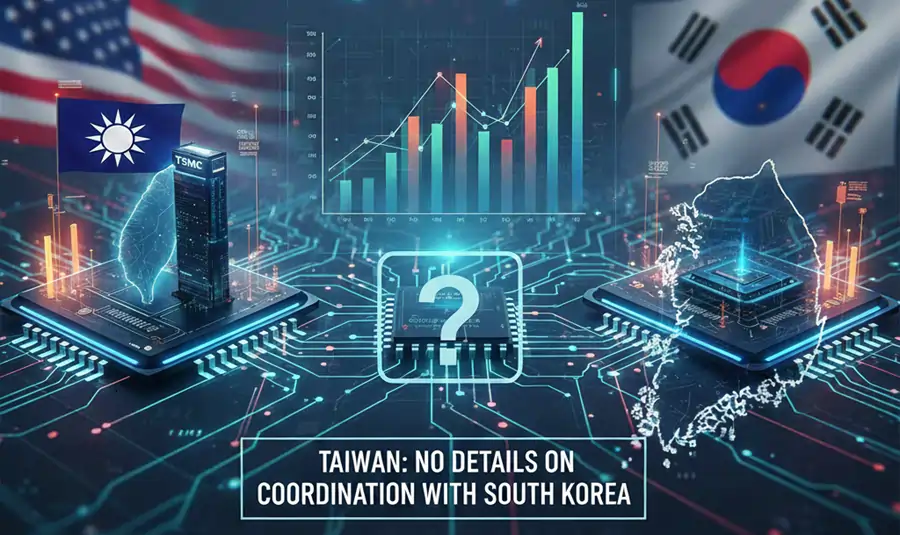
Taiwan has stated that it has “no information or knowledge” of any partnership with South Korea concerning U.S. chip tariffs, rejecting rumors that the two semiconductor leaders might be coordinating their trade approaches. The government highlighted that recent beliefs regarding coordinated efforts were baseless and unrelated to current policy debates. Officials emphasized that Taiwan’s strategy for tariff negotiations is autonomous and centered solely on its direct interactions with Washington.
Government statements indicate that Taiwan’s discussions with the United States occur exclusively between Taipei and Washington, without any joint planning, consultation, or information sharing with Seoul. Officials emphasized that every economy has its own negotiation pathways and policy goals when addressing trade issues with the U.S. The explanation comes after public theories suggested that the two nations significant contributors to global chip manufacturing could be considering collaborative approaches in light of increasing U.S. trade restrictions.
Taiwan emphasized that although the rivalry with South Korea in semiconductor production is fierce, both countries are taking their own approaches in reacting to U.S. tariff regulations. Officials emphasized that there is no cohesive strategy or collaborative action influencing their stances. The statement seeks to strengthen Taiwan’s autonomous decision-making in the global chip trade landscape, despite ongoing industry competition and geopolitical influences affecting market conditions.
Key Points:
- Taiwan claims it is unaware of any joint tariff arrangements with South Korea.
- Affirms that its discussions with the U.S. are managed separately.
- Both nations continue to be competitors in semiconductor manufacturing despite rumors.